Grubs can damage your lawn before you ever see them. These beetle larvae live under the soil and feed on grass roots, which can leave your turf weak, loose, and unable to recover from stress. For homeowners in Moseley, Midlothian, and nearby Virginia areas, spotting the signs early can help prevent larger lawn damage.
A grub problem can look like drought stress, lawn disease, or normal summer thinning. The difference is that grub damage starts below the surface, where roots are being eaten. If the lawn keeps getting worse even with regular watering and care, it may be time to schedule a professional inspection.
What Are Lawn Grubs?
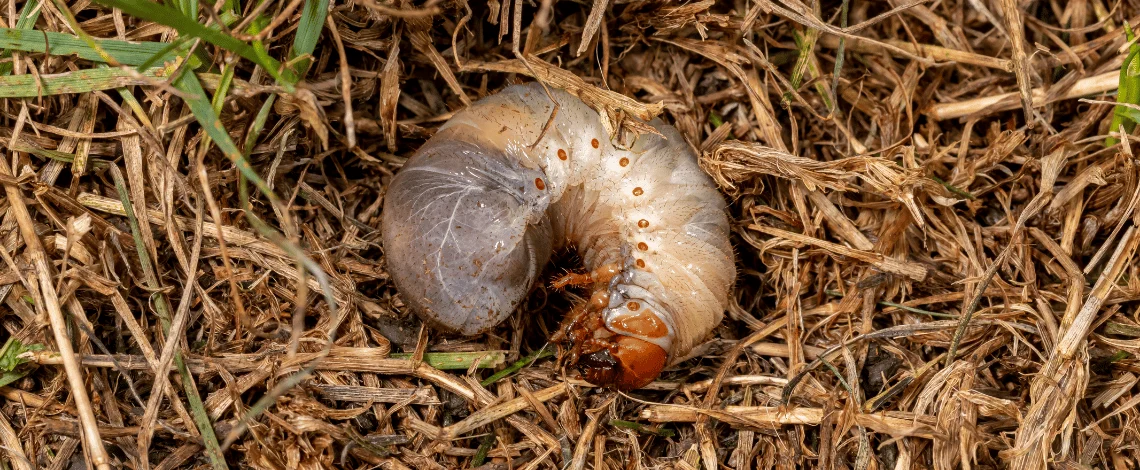
Lawn grubs are white, curled larvae that live in the soil and feed on grass roots. A small number of grubs may not cause major damage, but a larger population can weaken the turf and create brown patches. Since they stay underground, homeowners usually notice the damage before they notice the insects.
Common signs of grubs include:
- Brown or yellow patches
- Loose or spongy turf
- Grass that pulls up easily
- Animal digging in the lawn
- Weak grass that does not improve after watering
1. Brown or Yellow Patches Keep Spreading
One of the most common signs of grubs in your yard is irregular brown or yellow patches. These spots may start small, then spread as grubs continue feeding on the roots. Unlike simple dry spots, grub-damaged areas often do not bounce back after watering.
Watch for patches that:
- Spread without an obvious reason
- Look uneven or irregular
- Show up during warm weather
- Return in the same areas each year
2. The Grass Feels Loose or Spongy
Healthy grass should feel firmly rooted when you walk across it. If certain areas feel soft, loose, or spongy, the root system may be damaged. This can happen when grubs weaken the connection between the turf and the soil.
3. Turf Pulls Up Like a Loose Carpet
If the grass lifts easily when you pull on it, that can be a strong sign of grub damage. Since grubs feed on the roots, affected turf may peel back like a loose rug. Healthy grass should resist being lifted because the roots are still anchored in the soil.
A quick check includes:
- Find the edge of a brown or thinning patch.
- Gently tug on the grass.
- Look for damaged roots or white curled larvae underneath.
4. Birds, Skunks, or Other Animals Are Digging in the Lawn
Grubs attract animals because they are a food source. Birds, skunks, raccoons, and other wildlife may dig into the lawn while searching for them. This can make the existing turf damage even worse.
Animal-related signs may include:
- Small holes in the lawn
- Torn-up turf
- Birds feeding in the same spots
- Loose soil around damaged areas
5. Your Lawn Looks Drought-Stressed After Watering
A grub-damaged lawn may look dry, wilted, or weak even after rain or irrigation. Since the roots are damaged, the grass cannot absorb water the way it should. This is why grubs in lawns around Midlothian and Moseley can be mistaken for heat stress.
6. Weeds Start Filling In Thin Areas
When grubs damage turf, they create open space where weeds can spread. Thin grass gives weeds more sunlight, room, and less competition. If weeds are moving into damaged patches, the lawn may need both grub treatment and recovery care.
7. You Find Grubs in the Soil
The clearest sign is finding grubs under the damaged turf. If you peel back a struggling section and see white, curled larvae, you may have an active grub problem. A professional lawn care provider can inspect the area and determine whether grub treatment is needed.
Grub Damage vs. Other Lawn Problems
Grub damage can resemble drought stress, lawn disease, compacted soil, or weed pressure. A proper diagnosis helps avoid treating the wrong issue. This is especially important when lawn damage continues to spread despite regular maintenance.
Lawn Problem | What It May Look Like | Key Difference |
Grub damage | Brown patches, loose turf, animal digging | Turf may lift easily because roots are damaged |
Drought stress | Dry, wilted, crunchy grass | Grass may improve after deep watering |
Lawn disease | Spots, rings, or discolored patches | Turf may stay rooted but show blade damage |
Compacted soil | Thin grass, pooling water, weak growth | Soil feels hard and may need aeration |
Weed pressure | Weeds spreading through thin turf | Often follows thinning caused by another issue |
What To Do If You Think You Have Grubs
If you suspect a grub problem, avoid guessing based on the surface damage alone. Grub issues should be handled based on timing, lawn condition, and the extent of visible damage. A professional can help determine whether your lawn needs grub control, recovery care, or a broader lawn health plan.
Helpful next steps include:
- Check whether brown patches pull up easily.
- Look for animal digging or birds feeding in the lawn.
- Avoid overwatering without knowing the cause.
- Schedule a lawn inspection if damage keeps spreading.
- Ask about grub treatment, fertilization, aeration, and weed control.
Professional Grub Control for Moseley and Midlothian Lawns
Grub problems can be frustrating because the damage starts underground. If your lawn has spreading brown patches, loose turf, animal digging, or weak growth that does not improve with watering, it may be time for a closer look. Willmarth Property Services can help identify signs of grubs in your yard and recommend the right lawn care approach.
Our lawn health services are designed to support stronger turf from the roots up. From grub control and pest control to fertilization, weed control, aeration, and soil amendments, we help homeowners protect their lawns through every season. Contact us today to schedule lawn care in Moseley, Midlothian, or the surrounding Virginia areas.